Low pressure is one of the most common reasons a Worcester Bosch boiler stops working, and it’s usually an easy fix you can do yourself in about five minutes. Worcester boilers use one of three types of filling controls, so the first step is working out which one you have. Here’s how to top up each one, and when it’s time to call us instead.
At a glance
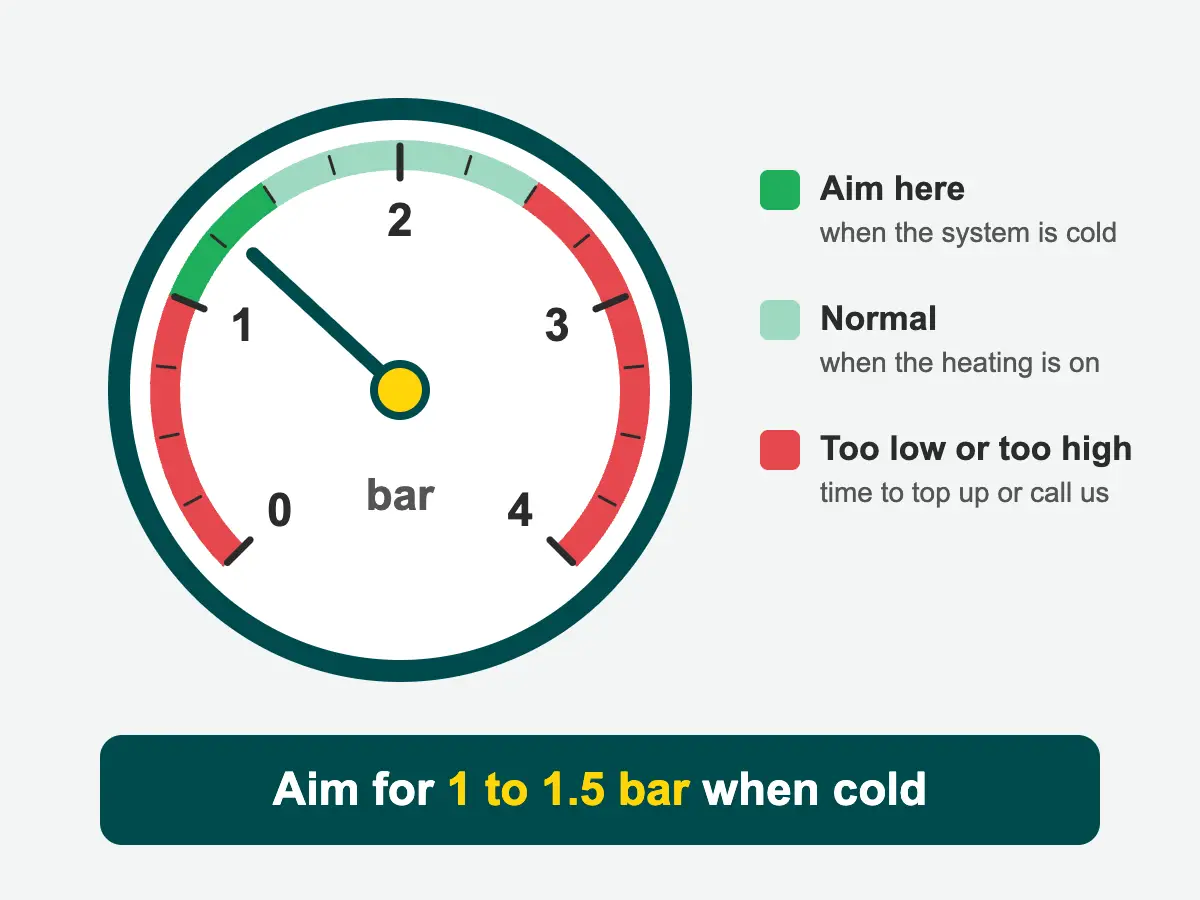
- Aim for: just over 1 bar when the system is cold
- Time needed: about 5 minutes
- You'll need: an old towel, and your filling key if your boiler uses one
- Call us if: you're topping up more than once or twice a year
Before you start
- Turn the heating off and let the system cool down.
- Put an old towel under the boiler to catch any drips.
- Have your user guide handy if you've got it.
- Never take the front cover off your boiler. Anything inside it is a job for a Gas Safe engineer.
Check the pressure and find your filling controls
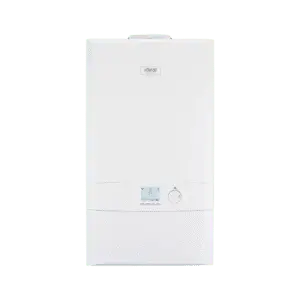
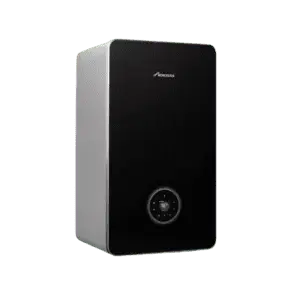
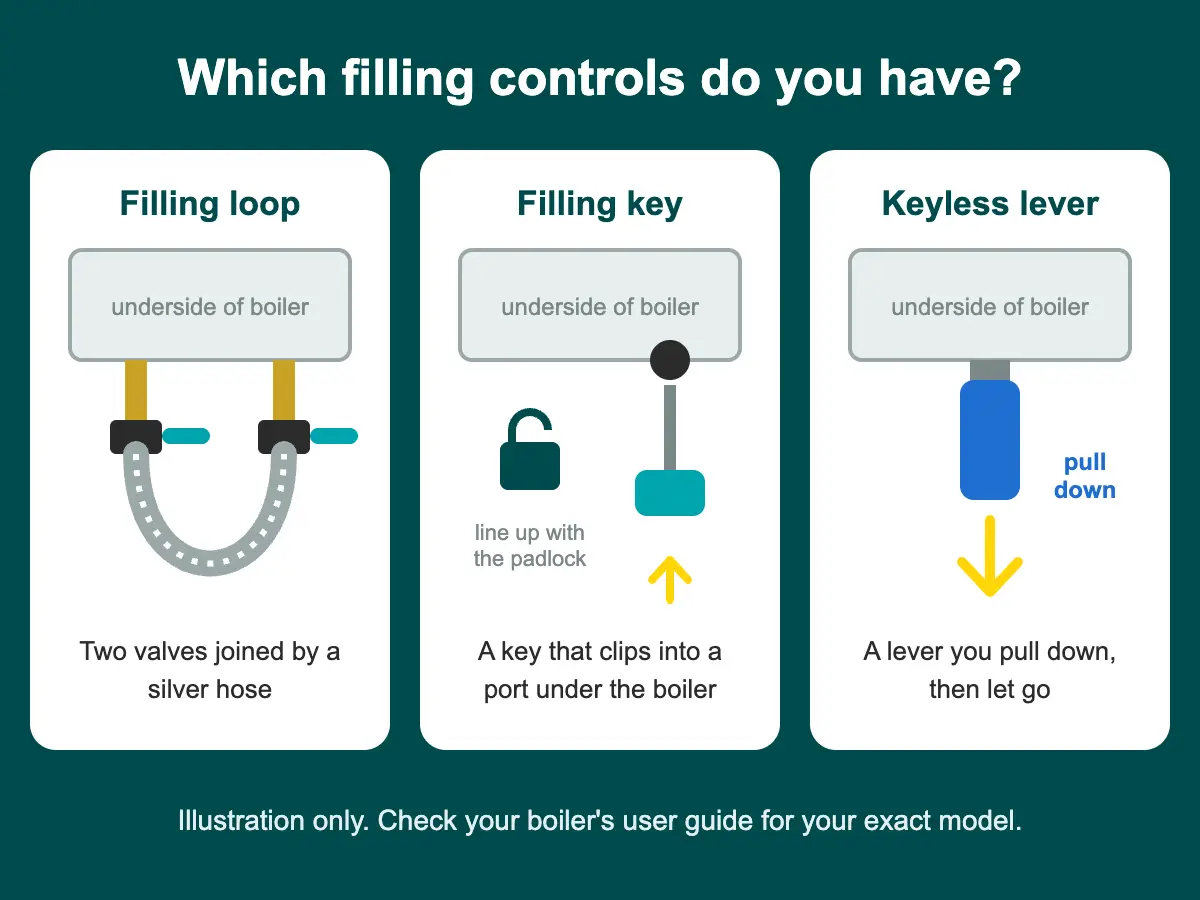
The pressure gauge is on the front of the boiler, either a dial or a reading on the display. If it’s below 1 bar, or in the red, it needs topping up. Next, look underneath the boiler. Worcester boilers use a filling key, a blue keyless lever or an external filling loop.
How to top up a Worcester Bosch boiler
If your boiler has a filling key
Many Worcester Greenstar combis use a filling key. It’s usually clipped on a flap underneath the boiler, or it may have been left with you when the boiler was fitted.
- Turn the heating off and let the system cool down.
- Find the black port on the underside of the boiler, towards the front right.
- Line up the arrow on the key with the open padlock symbol, then push the key into the port.
- Turn the key and watch the pressure gauge. Stop when it reads just over 1 bar.
- Turn the key back to the open padlock and pull it out. A few drips of water are normal.
- Clip the key back in its place so you can find it next time.
On some older models you turn a white plastic square next to the port to let the water in. Your user guide shows which you have.
If your boiler has a blue lever
Newer Worcester boilers have a keyless filling link: a blue lever on the underside of the boiler.
- Turn the heating off and let the system cool down.
- Find the blue lever on the bottom of the boiler.
- Pull the lever down and watch the pressure gauge.
- Let go of the lever as soon as the gauge reads just over 1 bar.
If your boiler has an external filling loop
Some Worcester system and regular boilers have a filling loop instead: two valves with a silver hose between them, under the boiler or near the hot water cylinder.
- Turn the heating off and let the system cool down.
- If the hose isn’t already connected, attach it to both valves.
- Open the valve on the cold mains water side.
- Open the valve on the heating side and watch the pressure gauge.
- Close both valves when it reads about 1 bar.
- Remove the hose if it’s detachable. A little water may drip out.
Afterwards
- Turn the boiler back on. If it's still showing a fault, press the reset button.
- Run the heating and check the gauge again. It's normal for the pressure to rise a little while the heating's on.
- If you've just bled your radiators, check the pressure again, as bleeding lets pressure out.
Pressure keeps dropping?
Topping up once or twice a year is normal. Stop and get in touch if:
- You're topping up every month or more often
- The pressure drops again soon after topping up
- The pressure keeps rising after you've closed the valves
- The gauge reads zero or won't rise at all
- You can see water leaking from the boiler, pipes or radiators
Frequent top-ups usually mean a small leak somewhere in the system or a faulty pressure relief valve. Both need an engineer, so give us a call.
Need a hand?
Can't find your filling controls?
Send us a photo of the underside of your boiler on WhatsApp and we’ll let you know what you’re looking at. If the pressure won’t stay up, we’ll get you booked in.
Worcester boiler pressure FAQs
Just over 1 bar when the system is cold. It can rise a little when the heating is on, which is normal. Your user guide gives the exact range for your model.
It's usually clipped on a flap underneath the boiler. If it isn't there, it may have been left with you when the boiler was fitted, so check the folder with your user guide.
Yes. It's a simple job you can do yourself, as long as you only use the filling controls you can clearly identify and never take the front cover off the boiler.
Bleeding radiators lets some pressure out, which is normal. If it keeps dropping on its own, there may be a small leak or a faulty pressure relief valve, so get in touch.