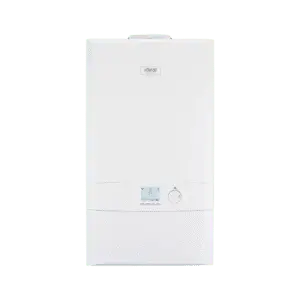
Ideal Logic, Vogue and Instinct boilers will stop working if the pressure drops too low. The good news is that on most Ideal combis you can top it up yourself in a few minutes. Here’s how, and when it’s time to call us instead.
At a glance
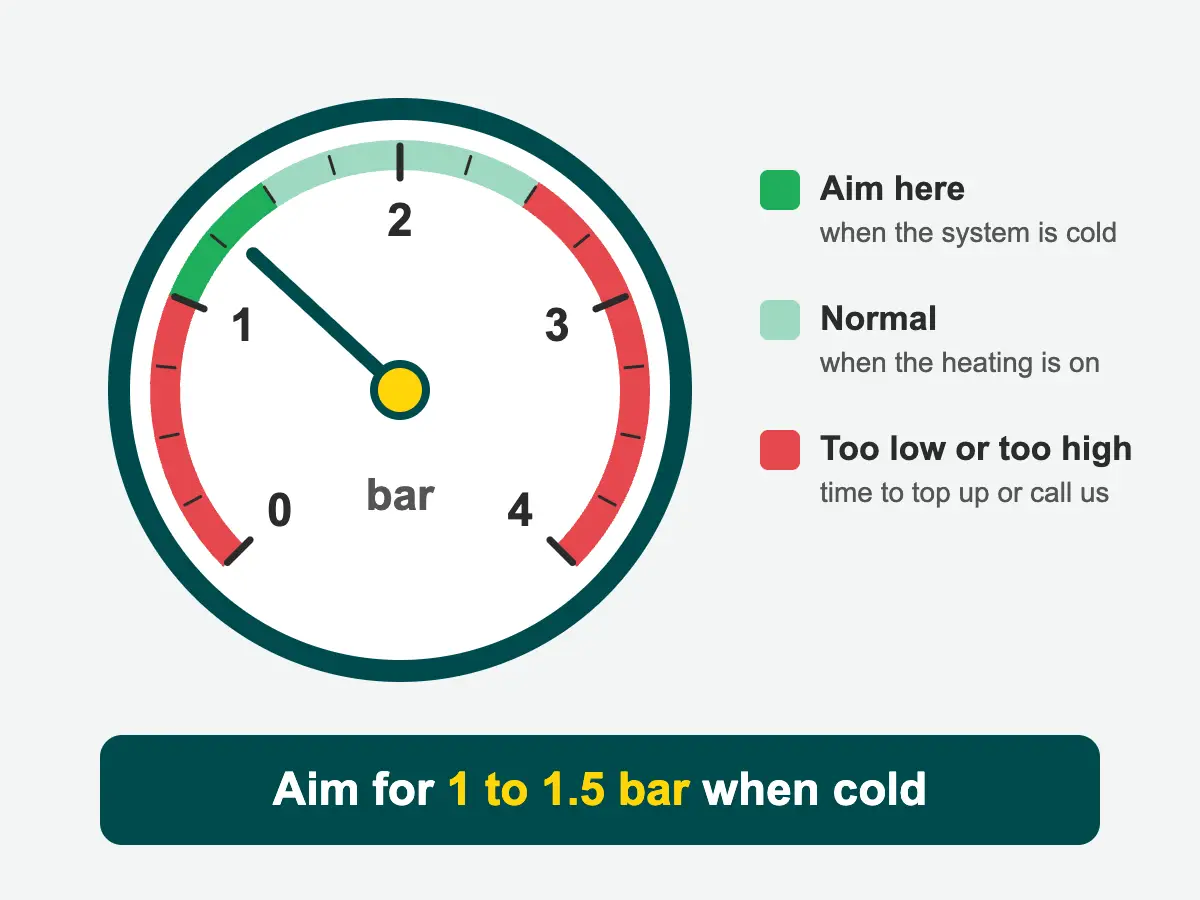
- Aim for: 1 to 1.5 bar when the system is cold
- Time needed: about 5 minutes
- You'll need: an old towel
- Call us if: you're topping up more than once or twice a year
Before you start
- Turn the heating off and let the system cool down.
- Put an old towel under the boiler to catch any drips.
- Have your user guide handy if you've got it.
- Never take the front cover off your boiler. Anything inside it is a job for a Gas Safe engineer.
Check the pressure and find your filling controls
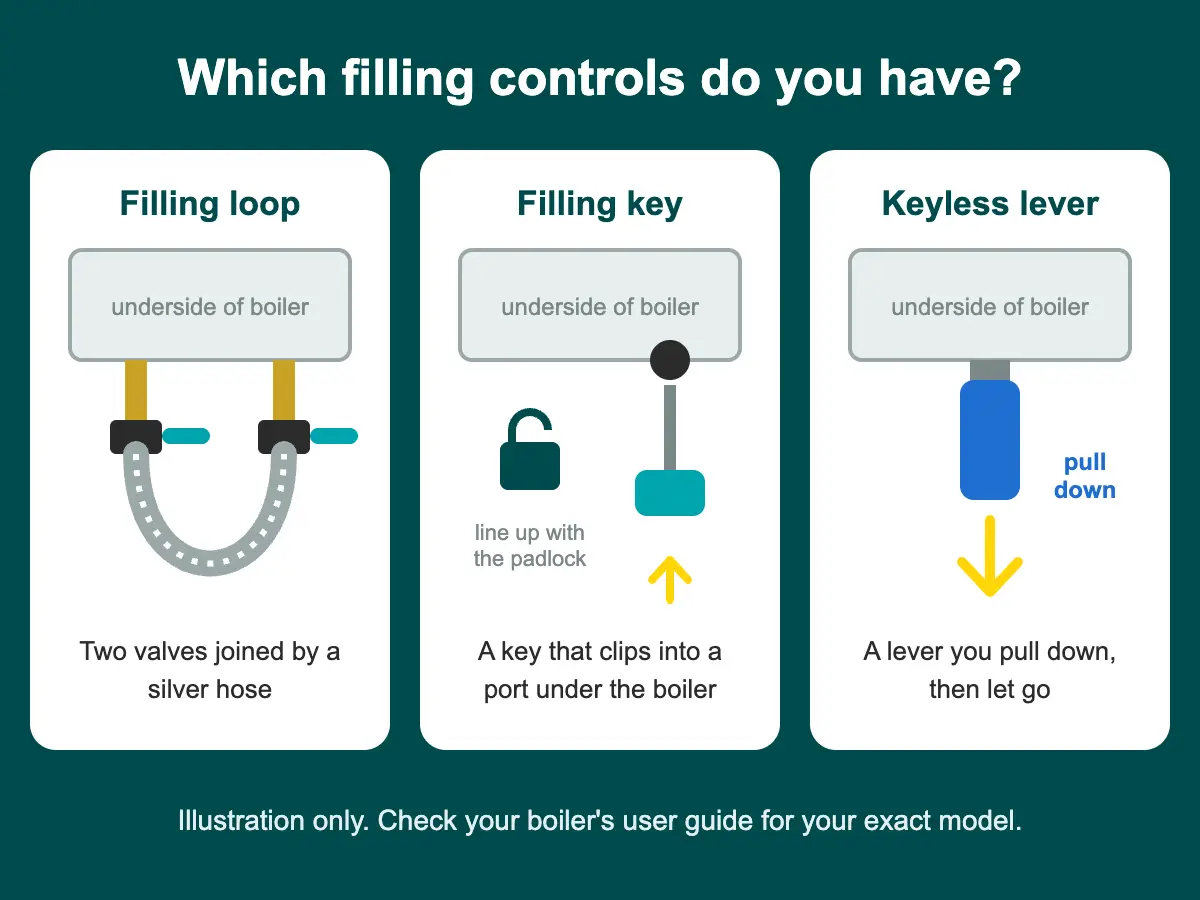
On Ideal boilers made from 2016 onwards, the pressure gauge is usually on the front, sometimes behind a drop-down flap. On older boilers it’s often a separate gauge on the pipework under the boiler, near the isolation valves. If it reads below 1 bar, it needs topping up. Most Ideal combis have either a flexible silver hose or a ridged, horseshoe-shaped pipe underneath.
How to top up an Ideal boiler
Using the filling controls under the boiler
- Switch the boiler off and let the system cool. Only check and top up the pressure when it’s cold.
- Check the reading on the pressure gauge.
- Find the filling controls under the boiler. Only touch controls you can clearly identify.
- Open the valve slowly while watching the gauge. If there are two valves, you may need to open both, and the pressure can rise quickly.
- Close the valves once the gauge reads 1 to 1.5 bar, and make sure they’re fully closed.
- Switch the boiler back on. The pressure may rise slightly while the heating is on, which is normal.
Got a system or heat-only boiler?
The filling loop may be somewhere else, such as near the hot water cylinder or in an airing cupboard, or the hose may have been removed after the boiler was fitted. If you can’t find it, send us a photo and we’ll help.
Afterwards
- Turn the boiler back on. If it's still showing a fault, press the reset button.
- Run the heating and check the gauge again. It's normal for the pressure to rise a little while the heating's on.
- If you've just bled your radiators, check the pressure again, as bleeding lets pressure out.
Pressure keeps dropping?
Topping up once or twice a year is normal. Stop and get in touch if:
- You're topping up every month or more often
- The pressure drops again soon after topping up
- The pressure keeps rising after you've closed the valves
- The gauge reads zero or won't rise at all
- You can see water leaking from the boiler, pipes or radiators
Also get in touch if the pressure keeps rising after the valves are closed, or if water is leaking from the boiler itself.
Need a hand?
Can't find your filling controls?
Send us a photo of the underside of your boiler on WhatsApp and we’ll let you know what you’re looking at. If the pressure won’t stay up, we’ll get you booked in.
Ideal boiler pressure FAQs
Around 1 to 1.5 bar when the system is cold. Most gauges show this as a green zone. It can rise a little when the heating is on, which is normal.
On boilers made from 2016 onwards, it's usually on the front, sometimes behind a drop-down flap. On older boilers it's often on the pipework underneath, near the isolation valves.
Yes. It's a simple job you can do yourself, as long as you only use the filling controls you can clearly identify and never take the front cover off the boiler.
Bleeding radiators lets some pressure out, which is normal. If it keeps dropping on its own, there may be a small leak or a faulty pressure relief valve, so get in touch.